Today, Caliber (NASDAQ: CWD) operates across multiple real estate strategies, including buying and operating existing income-producing commercial properties, stepping into value-add situations and getting involved in projects that need fresh capital, new structure, or a more active operator mindset. It is not about being flashy. It is about being consistent.
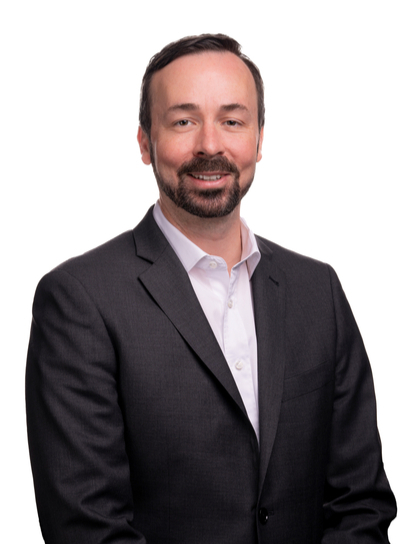 Chris Loeffler, CEO of Caliber (NASDAQ: CWD)
That consistency is also how Caliber built to scale. Managing $2.6 billion of assets did not happen from one good year; it came from repeating the basic principles of investing and management, such as sourcing deals others miss, being transparent with investors and building trust across wealth managers, family offices and ultra high-net-worth clients who care more about process than marketing.
So, where does tokenization fit into a real estate story? For Chris, it started as curiosity. He looks at tokenization the same way people looked at the early internet. Real estate and private markets still run on an old system with paper-heavy workflows, slow settlement, high friction and limited flexibility for investors.
Tokenization is a modernization of that system that enables greater ownership transparency, better asset tracking, more liquidity for a historically “illiquid” asset class, and potentially a larger democratic ownership prospect for assets.
That is the path that led to Caliber’s expansion into Digital Assets, starting with a Digital Asset Treasury (DAT) strategy. Tokenization was the “why.” DAT became the first “how.”
It is still a small slice of what Caliber does, but it is a deliberate slice, built to give investors exposure to the infrastructure behind where finance is going, without turning the firm into a speculation shop.
In the Q&A below, Chris breaks down Caliber’s real estate foundation, why this cycle matters for allocators and why wealth managers and family offices should at least understand DAT as part of what the next decade may look like.
Q: Chris, for people meeting you for the first time, what is Caliber and why did you decide to build a Digital Asset Treasury strategy?
Caliber has been in the business of building real assets and alternative investments for a long time. We know what it means to underwrite risk, manage through cycles and stay disciplined when the market gets noisy.
The Digital Asset Treasury strategy emerged from a simple belief. Finance is finally going through a real upgrade. Not a surface-level app upgrade, an infrastructure upgrade. And when you see an upgrade cycle like that, the smart move is to focus on the picks and shovels.
We think Chainlink sits right in the middle of that story, which is why we centered our strategy around their network.
Q: When people hear “crypto,” they think speculation. How do you explain what you are doing without the hype?
Most people’s experience with crypto is price charts and hot takes. That is not how I look at it.
Blockchain is the evolution of the internet, learning how to move value, not just information.
Once you see it that way, the question becomes: what has to exist for that to work safely at scale? Data, verification, connectivity, automation, compliance.
That is the lane we are in.
Q: So why Chainlink? Why make LINK the anchor?
If you are going to put real assets on-chain, you have to solve a basic problem.
Smart contracts need reliable information from the real world, things like prices, rates, events, identity, all of it. Chainlink is the infrastructure layer that enables that connection.
That is why we like it. It is the foundation of modern finance, not some cheap scheme.
It is not exciting until you realize nothing works without it.
Q: What does “DAT strategy” actually mean in practice? What are you doing day to day?
It is a governed strategy, not a trade. We have a framework for acquisition, custody, risk controls, reporting, and oversight; methodical in how we build the position.
And we are not trying to be heroes and time the market.
The goal is disciplined accumulation over time, with the option to generate yield through staking as the program and risk profile allow.
Q: You have said Caliber is not just buying LINK and sitting on it. What makes your approach different?
I like active strategies that have multiple ways to win.
Holding LINK is one piece, staking is another. Building relationships with the best operators in the ecosystem is a further reason for excitement.
Chainlink is decentralized, meaning it works because of the contributions of node operators around the world.
Over time, we see opportunities to be more than a passive holder by participating in this evolving infrastructure, keeping the system running at scale.
Q: Explain staking like you would to a family office that has never touched digital assets.
Think of staking like posting collateral to support a network.
Traditional finance does this all day long with margin, clearing and settlement. It is the same concept, just native to the protocol.
The reason allocators care is simple.
If you can earn a yield while also supporting the underlying infrastructure, that changes the return profile. It is not free money; there are risks and rules, but it is an attractive way to generate a consistent, annualized yield from liquid asset holdings in LINK.
Q: Why should wealth managers and family offices even consider something like this?
Because their clients are asking, and because ignoring an infrastructure shift does not make it go away, it leads to falling behind in the race.
Most advisors do not want to pick a basket of tokens.
They want a thesis they can defend, a structure they can implement and a process they can explain.
If tokenization is a long-term modernization trend, you at least want a smart way to get exposure to the infrastructure behind it.
Q: How do you talk about Caliber versus just buying LINK directly?
Buying LINK directly is straightforward.
You own the token, you manage custody, you manage the operational details and you decide if you stake. Staking is limited, so many LINK holders do not have access to get their LINK staked yet.
Caliber is different. You are gaining exposure to LINK while also owning an existing real estate asset management business with tangible net worth.
As an institutional investor, Caliber has a stronger ability to accumulate LINK, stake its LINK, and potentially gain access to invest in other components of Chainlink’s ecosystem, such as node operators.
All of this wrapped in public equity.
Q: What risks do sophisticated allocators need to understand upfront?
First, volatility is real in this marketplace.
Second, operational discipline matters. Custody, security, internal controls, accounting and regulatory posture are very important.
Third, there is ecosystem risk. Protocol risk, smart contract risk, market structure risk.
These are risks we have considered and sought to manage in Caliber’s strategy.
Q: Caliber comes from real assets. How does that connect to tokenization?
Tokenization is the process of modernizing how investments are bought, owned, sold, and borrowed against.
Private real estate funds are one of the most attractive investments to tokenize.
Owning a limited partner or members' interest in one of these funds comes with periodic records, paperwork, and no ability to borrow against the position or sell it.
Tokenization fixes this.
An example everyone can relate to is home equity. Instead of taking on more debt and another monthly payment to renovate their house, a homeowner could sell a small equity slice of the home.
Investors get exposure to appreciation, and the homeowner gets capital to renovate. That kind of thing is hard today, but it gets easier when the rails modernize.
Q: There is a lot of noise in this space. How do you separate signal from noise?
I watch what serious institutions actually do, not what they say on panels.
When you see major market infrastructure players, banks and exchanges testing tokenized workflows, that is a signal.
When you see the same infrastructure layer showing up across those pilots, that is an even louder signal.
LINK is transparent, and we can see their total value enabled (TVE) to track the actual usage of the network.
Q: What does success look like for the DAT strategy over the next year or two?
Success comes in three parts.
Part one: disciplined accumulation and monetization (staking) of our LINK position.
Part two: the creation, launch, and growth of Caliber-managed digital asset fund investments, driving Caliber’s AUM up with less scaling friction than real estate funds.
Part three: the implementation of Chainlink’s technology, along with complementary services, to modernize (tokenize) Caliber’s real estate funds and improve our customers’ experience.
Thankfully, we can execute all 3 parts in parallel.
Q: If a wealth manager wanted one diligence question to start with, what would you tell them to ask?
Ask: “Is this movement into blockchain a trade (fad) or a strategy (trend capture)?”
Then get more specific with questions like: What is the policy? Who is overseeing it? How is custody handled? What are the risk limits? How is reporting done? How will you gain leverage over your peers? How is your strategy more valuable to a shareholder as compared to direct investment into the digital assets themselves? What unique access/know-how does your management team bring to the table?
Q: What is the biggest misconception you run into?
That this is just another crypto bet. Just another “DAT.”
I see Caliber as investing in the future of finance, riding the largest trend we have seen in decades.
The finance industry has not modernized its core rails in a long time, and this is one of those rare, once-in-a-generation upgrade cycles.
You can watch it happen, or you can own a stake in the infrastructure that helps power it.
Disclaimer